Platform comparison
| Platform | YES odds | NO odds | Fee | KYC | Settlement | |
|---|---|---|---|---|---|---|
Polymarket (via Robinhood Prediction Markets) Pick polygram.ink (preferred broker) |
5% | 95% | 0% (USDC on-chain) | No-KYC up to $1,500 | USDC, auto via UMA oracle | Go to the live market → |
Polymarket (direct) polymarket.com |
5% | 95% | 0% | Geo-blocked in US/UK/EU | USDC, on-chain | Go to the live market → |
Kalshi kalshi.com |
— | — | Up to 7% per trade | US-only, KYC required | USD | Go to the live market → |
Betfair Exchange betfair.com |
— | — | 2-5% commission | Full KYC from first trade | GBP / EUR | Go to the live market → |
Manifold Markets manifold.markets |
— | — | Play-money (mana) | None — play-money | Mana (no cash-out) | Go to the live market → |
Outcome probabilities
Current market-implied probability for each outcome, from the live order book.
| Outcome | Probability |
|---|---|
| August 31 | 5% |
| July 31 | 1% |
Market context
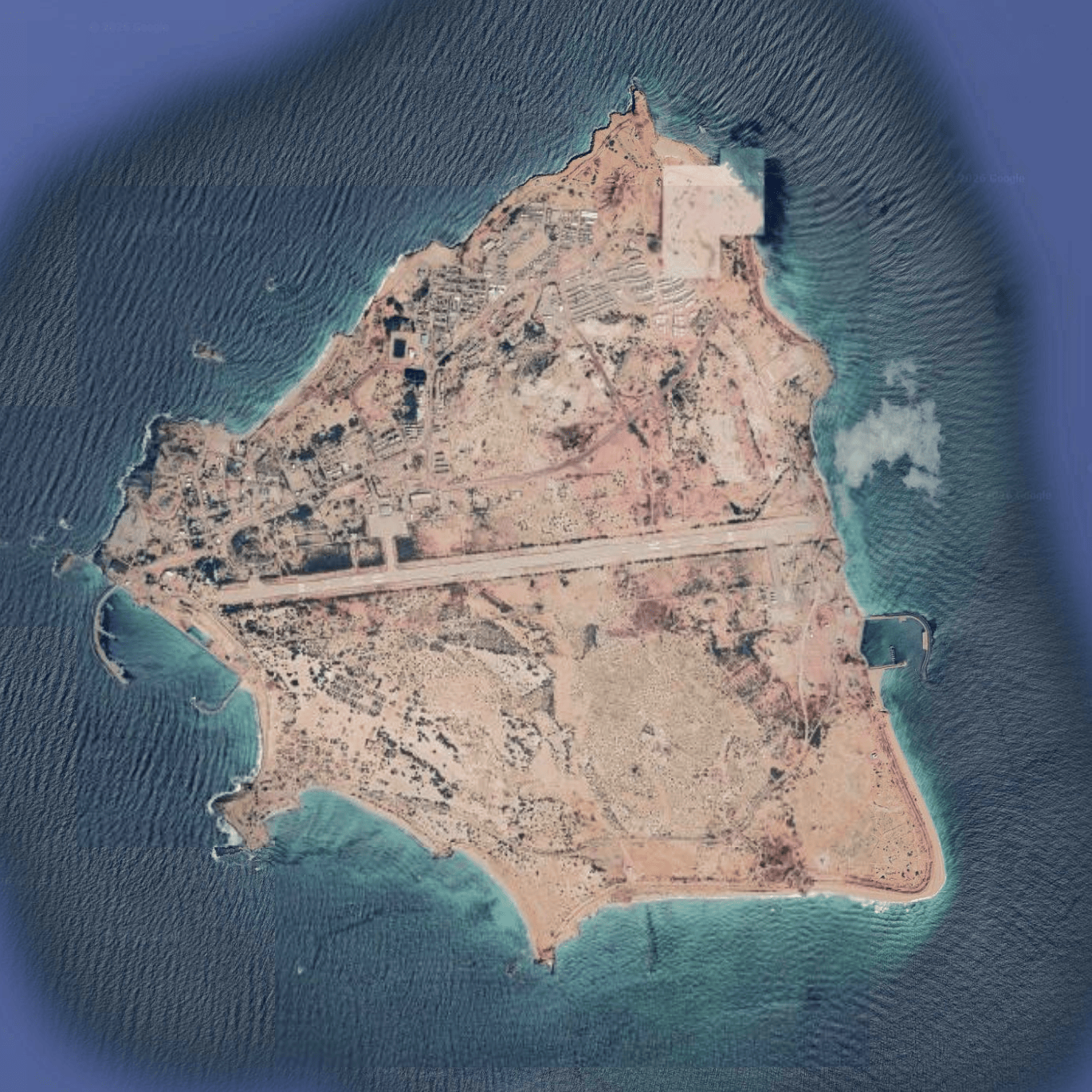
Abu Musa sits near the mouth of the Strait of Hormuz and is presently administered by Iran, while the United Arab Emirates continues to claim it as part of Sharjah, so a “Yes” outcome would require a real transfer of primary governmental or military control rather than a short-lived incident or naval pressure.[3][1] Tehran has also used the island in ways that reinforce its hold, including announcing maritime offices there, which is more consistent with consolidation than retreat.[2]
That history matters because the market is not asking whether sovereignty is disputed; it is asking whether Iran is no longer in control by the close date. The long-running three-island dispute has endured since 1971, and recent reporting still describes the islands as disputed rather than under changing administration, which makes the crowd-implied 1% YES look consistent with a very high bar for resolution.[1][3] On platforms, the same event may be shown differently: Polymarket and Kalshi typically display implied probability directly, while Betfair and Smarkets quote decimal odds that must be converted back into probability, so identical views can look different at first glance.
The main catalysts to watch are any UAE-Iran diplomatic breakthrough, a formal international mandate, or evidence of a durable transfer of administration, police, or military presence; absent that, routine rhetoric or maritime activity will not settle the market. Traders should also watch for spillover from broader Hormuz security tensions, because those can move prices without changing the actual control test. Platform mechanics matter too: fee schedules, market access, and KYC reach can affect which venue reflects the sharpest price, but they do not change the underlying settlement standard.
Methodology
We read Abu Musa Island no longer under Iranian control by 2026? from four platform perspectives: Polymarket (on-chain CLOB), Kalshi (CFTC-regulated exchange), Betfair Exchange (sports book exchange), Smarkets (peer-to-peer betting exchange). Polymarket's live mid is the canonical probability; the side-by-side columns benchmark fees, KYC, settlement currency and deposit rails so you can choose the venue that fits your jurisdiction and trade size.
Resolution & payout
Polymarket settles via UMA Optimistic Oracle on Polygon. A proposer posts the outcome with a bond, the two-hour window runs, then the smart contract pays USDC.
Kalshi settles USD through the CFTC-regulated clearinghouse — the cleanest variant, with heavier KYC. Betfair Exchange settles in account currency (GBP/EUR), net of 2-5% commission. Smarkets follows the same model as Betfair with a lower default 2% commission.
FAQ
- Polymarket vs Kalshi — which is better?
- Depends on your location. Kalshi is CFTC-regulated, US-only with full KYC. Polymarket is global, on-chain, no KYC up to $1,500. Polymarket has ~10x higher liquidity but higher regulatory risk.
- What does Polymarket cost vs Kalshi?
- Polymarket: 0% fees, only Polygon network costs (~$0.01/trade). Kalshi: up to 7% per trade plus spread. For high-frequency traders, Polymarket is dramatically cheaper.
- Which platform has the deepest liquidity?
- Polymarket — by a wide margin. Top markets reach $50-500M volume, Kalshi ~$200M cumulative, Betfair similar. Deeper liquidity means your trade moves the quote less.
- Is Betfair a Polymarket alternative?
- Only partially. Betfair Exchange is UK-focused with a sports-betting emphasis; they have politics markets but with thinner liquidity than Polymarket. Settlement in GBP/EUR, 2-5% commission on winnings.
- Which platform supports Klarna/SOFORT?
- Directly: none. Polymarket accepts only USDC on Polygon. Robinhood Prediction Markets offers a fiat on-ramp via Klarna or SOFORT (DE/AT/CH) and converts internally to USDC for the Polymarket order book. T+1 processing.
%22%2F%3E%3Cpath%20d%3D%22M%206%2066%20A%2026%2026%200%200%201%2058%2066%22%20fill%3D%22%23E6B98D%22%20opacity%3D%220.9%22%2F%3E%3Ccircle%20cx%3D%2232%22%20cy%3D%2226%22%20r%3D%2222%22%20fill%3D%22%23F5CBA7%22%2F%3E%3Crect%20x%3D%2210%22%20y%3D%224%22%20width%3D%2244%22%20height%3D%2214%22%20rx%3D%227%22%20fill%3D%22%2314b8a6%22%20opacity%3D%220.9%22%2F%3E%3Crect%20x%3D%228%22%20%20y%3D%2218%22%20width%3D%228%22%20%20height%3D%2218%22%20rx%3D%224%22%20fill%3D%22%2314b8a6%22%20opacity%3D%220.7%22%2F%3E%3Crect%20x%3D%2248%22%20y%3D%2218%22%20width%3D%228%22%20%20height%3D%2218%22%20rx%3D%224%22%20fill%3D%22%2314b8a6%22%20opacity%3D%220.7%22%2F%3E%3C%2Fsvg%3E) and
and%22%2F%3E%3Cpath%20d%3D%22M%206%2066%20A%2026%2026%200%200%201%2058%2066%22%20fill%3D%22%23E6B98D%22%20opacity%3D%220.9%22%2F%3E%3Ccircle%20cx%3D%2232%22%20cy%3D%2226%22%20r%3D%2222%22%20fill%3D%22%23F5CBA7%22%2F%3E%3Cpath%20d%3D%22M%2010%2026%20A%2022%2028%200%200%201%2054%2026%22%20fill%3D%22%2314b8a6%22%20opacity%3D%220.9%22%2F%3E%3C%2Fsvg%3E)
Trade Abu Musa Island no longer under Iranian control by 2… on Robinhood Prediction Markets
Live order book, 0% fees, USDC settlement in seconds.
Open live market →