Platform comparison
| Platform | YES odds | NO odds | Fee | KYC | Settlement | |
|---|---|---|---|---|---|---|
Polymarket (via Robinhood Prediction Markets) Pick polygram.ink (preferred broker) |
68% | 32% | 0% (USDC on-chain) | No-KYC up to $1,500 | USDC, auto via UMA oracle | Go to the live market → |
Polymarket (direct) polymarket.com |
68% | 32% | 0% | Geo-blocked in US/UK/EU | USDC, on-chain | Go to the live market → |
Kalshi kalshi.com |
— | — | Up to 7% per trade | US-only, KYC required | USD | Go to the live market → |
Betfair Exchange betfair.com |
— | — | 2-5% commission | Full KYC from first trade | GBP / EUR | Go to the live market → |
Manifold Markets manifold.markets |
— | — | Play-money (mana) | None — play-money | Mana (no cash-out) | Go to the live market → |
Outcome probabilities
Current market-implied probability for each outcome, from the live order book.
| Outcome | Probability |
|---|---|
| 28°C | 68% |
| 29°C | 25% |
| 27°C | 5% |
| 30°C | 5% |
| 31°C | 2% |
| 32°C or higher | 1% |
| 22°C or below | 0% |
| 23°C | 0% |
| 24°C | 0% |
| 25°C | 0% |
| 26°C | 0% |
Market context
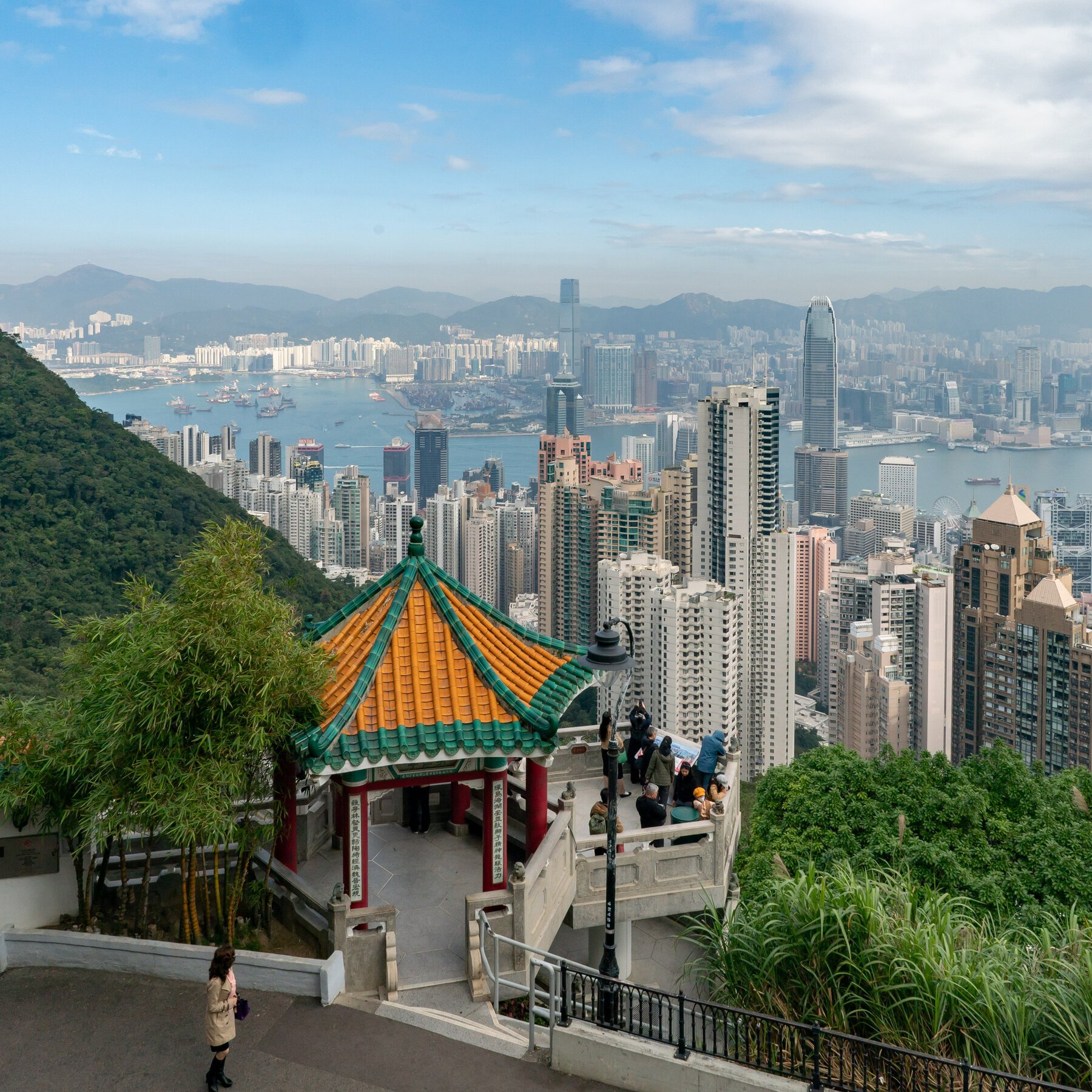
Hong Kong’s hottest reading on 3 August will be set by the Hong Kong Observatory’s **Absolute Daily Max** in degrees Celsius, and that figure is usually the cleanest way to read this market because the final settlement will use the Observatory’s published daily extract rather than an exchange price or live forecast. The most recent public framing for Hong Kong in August is simple: it is normally a hot, humid month, with typical daytime highs in the low 30s Celsius and occasional spikes well above that when the city is under clear skies or subsiding air. That means the market is less about whether it will be warm, and more about whether the day prints high enough to land in the upper temperature bands that these contracts normally separate on a one-decimal basis. [8][12][20]
For context, Hong Kong has already logged several extreme heat days in 2026, including 34.3C, 35.1C and 35.6C headlines reported by local outlets, with the Observatory itself used as the reference point for those records. In practical terms, that history makes low crowd-implied probabilities harder to read as a true forecast and more likely to reflect thin liquidity or a market that has not yet updated to a fresh heat signal. On the platform side, Polymarket typically shows prices as implied probability, while Kalshi and Betfair are usually easier to read in price-odds terms; Smarkets likewise quotes a market price but its fee structure and access rules differ, and KYC breadth can matter more than headline probability when traders compare across books. [9][11][13]
The main catalysts to watch are the Observatory’s morning and afternoon updates, any heat-related advisories, and whether the day’s sky condition stays stable enough for maximum temperatures to climb before the daily extract is finalised. The settlement clock matters because this contract resolves only after the Hong Kong Observatory publishes the finalized daily data for 3 August, so intraday spikes in the live map or station readings may matter for trading but not for settlement unless they are reflected in the final extract. That creates a spread between platforms: venues with faster repricing and lower latency can move on live weather updates, but the end result still hinges on the Observatory’s one-decimal Celsius record rather than an exchange consensus. [2][8][10]
Methodology
We read Highest temperature in Hong Kong on August 3? from four platform perspectives: Polymarket (on-chain CLOB), Kalshi (CFTC-regulated exchange), Betfair Exchange (sports book exchange), Smarkets (peer-to-peer betting exchange). Polymarket's live mid is the canonical probability; the side-by-side columns benchmark fees, KYC, settlement currency and deposit rails so you can choose the venue that fits your jurisdiction and trade size.
Resolution & payout
Polymarket settles via UMA Optimistic Oracle on Polygon. A proposer posts the outcome with a bond, the two-hour window runs, then the smart contract pays USDC.
Kalshi settles USD through the CFTC-regulated clearinghouse — the cleanest variant, with heavier KYC. Betfair Exchange settles in account currency (GBP/EUR), net of 2-5% commission. Smarkets follows the same model as Betfair with a lower default 2% commission.
FAQ
- Polymarket vs Kalshi — which is better?
- Depends on your location. Kalshi is CFTC-regulated, US-only with full KYC. Polymarket is global, on-chain, no KYC up to $1,500. Polymarket has ~10x higher liquidity but higher regulatory risk.
- What does Polymarket cost vs Kalshi?
- Polymarket: 0% fees, only Polygon network costs (~$0.01/trade). Kalshi: up to 7% per trade plus spread. For high-frequency traders, Polymarket is dramatically cheaper.
- Which platform is accessible globally?
- Polymarket is geo-blocked in the US/UK/EU. Kalshi is US-only. Betfair and Smarkets are UK-restricted. Robinhood Prediction Markets has a different geo footprint and routes to Polymarket's order book at 0% fees.
- Are all these platforms regulated?
- No. Kalshi is CFTC-regulated (US). Betfair and Smarkets are UK Gambling Commission licensed. Polymarket operates without explicit regulation — a different risk profile than a regulated sportsbook.
- Which platform supports Klarna/SOFORT?
- Directly: none. Polymarket accepts only USDC on Polygon. Robinhood Prediction Markets offers a fiat on-ramp via Klarna or SOFORT (DE/AT/CH) and converts internally to USDC for the Polymarket order book. T+1 processing.
%22%2F%3E%3Cpath%20d%3D%22M%206%2066%20A%2026%2026%200%200%201%2058%2066%22%20fill%3D%22%23E6B98D%22%20opacity%3D%220.9%22%2F%3E%3Ccircle%20cx%3D%2232%22%20cy%3D%2226%22%20r%3D%2222%22%20fill%3D%22%23F5CBA7%22%2F%3E%3Crect%20x%3D%2210%22%20y%3D%224%22%20width%3D%2244%22%20height%3D%2214%22%20rx%3D%227%22%20fill%3D%22%2314b8a6%22%20opacity%3D%220.9%22%2F%3E%3Crect%20x%3D%228%22%20%20y%3D%2218%22%20width%3D%228%22%20%20height%3D%2218%22%20rx%3D%224%22%20fill%3D%22%2314b8a6%22%20opacity%3D%220.7%22%2F%3E%3Crect%20x%3D%2248%22%20y%3D%2218%22%20width%3D%228%22%20%20height%3D%2218%22%20rx%3D%224%22%20fill%3D%22%2314b8a6%22%20opacity%3D%220.7%22%2F%3E%3C%2Fsvg%3E) and
and%22%2F%3E%3Cpath%20d%3D%22M%206%2066%20A%2026%2026%200%200%201%2058%2066%22%20fill%3D%22%23E6B98D%22%20opacity%3D%220.9%22%2F%3E%3Ccircle%20cx%3D%2232%22%20cy%3D%2226%22%20r%3D%2222%22%20fill%3D%22%23F5CBA7%22%2F%3E%3Cpath%20d%3D%22M%2010%2026%20A%2022%2028%200%200%201%2054%2026%22%20fill%3D%22%2314b8a6%22%20opacity%3D%220.9%22%2F%3E%3C%2Fsvg%3E)
Trade Highest temperature in Hong Kong on August 3? on Robinhood Prediction Markets
Live order book, 0% fees, USDC settlement in seconds.
Open live market →