Platform comparison
| Platform | YES odds | NO odds | Fee | KYC | Settlement | |
|---|---|---|---|---|---|---|
Polymarket (via Robinhood Prediction Markets) Pick polygram.ink (preferred broker) |
100% | 0% | 0% (USDC on-chain) | No-KYC up to $1,500 | USDC, auto via UMA oracle | Go to the live market → |
Polymarket (direct) polymarket.com |
100% | 0% | 0% | Geo-blocked in US/UK/EU | USDC, on-chain | Go to the live market → |
Kalshi kalshi.com |
— | — | Up to 7% per trade | US-only, KYC required | USD | Go to the live market → |
Betfair Exchange betfair.com |
— | — | 2-5% commission | Full KYC from first trade | GBP / EUR | Go to the live market → |
Manifold Markets manifold.markets |
— | — | Play-money (mana) | None — play-money | Mana (no cash-out) | Go to the live market → |
Outcome probabilities
Current market-implied probability for each outcome, from the live order book.
| Outcome | Probability |
|---|---|
| 31°C | 100% |
| 28°C or below | 0% |
| 29°C | 0% |
| 30°C | 0% |
| 32°C | 0% |
| 33°C | 0% |
| 34°C | 0% |
| 35°C | 0% |
| 36°C | 0% |
| 37°C | 0% |
| 38°C or higher | 0% |
Market context
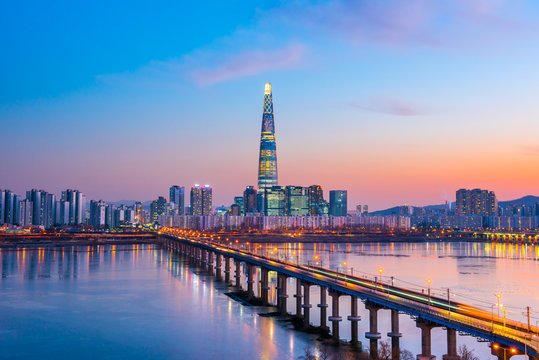
Seoul's summer heat in mid-August typically peaks between 28°C and 32°C, with occasional spikes above 33°C during heat waves. The 0% crowd probability on this market reflects either extreme confidence in a specific temperature band or sparse liquidity at the extremes of the range. Incheon International Airport, the official measurement station, sits near the coast and records slightly cooler readings than central Seoul due to maritime influence, a factor that historically suppresses the highest daily temperatures by 1–2°C compared to inland stations.
Historical August data from Incheon shows that temperatures exceeding 34°C occur roughly once every three to five years during particularly intense heat waves. The 2018 heat wave pushed readings to 35°C+, whilst more typical years see peaks in the 30–33°C range. Current market pricing suggests traders are anchored to median outcomes rather than tail-risk scenarios. Across major platforms—Polymarket uses decimal odds and charges 2% fees on both sides, whilst Kalshi and Betfair quote implied probabilities with varying fee structures—the divergence in how each book prices extreme temperature outcomes can reveal where smart money expects volatility. Smarkets' commission-based model sometimes attracts sharper traders on weather markets with clearer data dependencies.
Traders should monitor late July and early August weather patterns, particularly the position of the North Pacific high-pressure system and any tropical cyclone activity in the region, both of which drive Seoul's August temperatures. The Korea Meteorological Administration publishes seasonal forecasts in early August that often shift market expectations materially.
Methodology
We read Highest temperature in Seoul (Incheon) on August 13? from four platform perspectives: Polymarket (on-chain CLOB), Kalshi (CFTC-regulated exchange), Betfair Exchange (sports book exchange), Smarkets (peer-to-peer betting exchange). Polymarket's live mid is the canonical probability; the side-by-side columns benchmark fees, KYC, settlement currency and deposit rails so you can choose the venue that fits your jurisdiction and trade size.
Resolution & payout
Polymarket settles via UMA Optimistic Oracle on Polygon. A proposer posts the outcome with a bond, the two-hour window runs, then the smart contract pays USDC.
Kalshi settles USD through the CFTC-regulated clearinghouse — the cleanest variant, with heavier KYC. Betfair Exchange settles in account currency (GBP/EUR), net of 2-5% commission. Smarkets follows the same model as Betfair with a lower default 2% commission.
FAQ
- Polymarket vs Kalshi — which is better?
- Depends on your location. Kalshi is CFTC-regulated, US-only with full KYC. Polymarket is global, on-chain, no KYC up to $1,500. Polymarket has ~10x higher liquidity but higher regulatory risk.
- What does Polymarket cost vs Kalshi?
- Polymarket: 0% fees, only Polygon network costs (~$0.01/trade). Kalshi: up to 7% per trade plus spread. For high-frequency traders, Polymarket is dramatically cheaper.
- Which platform has the deepest liquidity?
- Polymarket — by a wide margin. Top markets reach $50-500M volume, Kalshi ~$200M cumulative, Betfair similar. Deeper liquidity means your trade moves the quote less.
- Is Betfair a Polymarket alternative?
- Only partially. Betfair Exchange is UK-focused with a sports-betting emphasis; they have politics markets but with thinner liquidity than Polymarket. Settlement in GBP/EUR, 2-5% commission on winnings.
- Are all these platforms regulated?
- No. Kalshi is CFTC-regulated (US). Betfair and Smarkets are UK Gambling Commission licensed. Polymarket operates without explicit regulation — a different risk profile than a regulated sportsbook.
%22%2F%3E%3Cpath%20d%3D%22M%206%2066%20A%2026%2026%200%200%201%2058%2066%22%20fill%3D%22%23E6B98D%22%20opacity%3D%220.9%22%2F%3E%3Ccircle%20cx%3D%2232%22%20cy%3D%2226%22%20r%3D%2222%22%20fill%3D%22%23F5CBA7%22%2F%3E%3Crect%20x%3D%2210%22%20y%3D%224%22%20width%3D%2244%22%20height%3D%2214%22%20rx%3D%227%22%20fill%3D%22%2314b8a6%22%20opacity%3D%220.9%22%2F%3E%3Crect%20x%3D%228%22%20%20y%3D%2218%22%20width%3D%228%22%20%20height%3D%2218%22%20rx%3D%224%22%20fill%3D%22%2314b8a6%22%20opacity%3D%220.7%22%2F%3E%3Crect%20x%3D%2248%22%20y%3D%2218%22%20width%3D%228%22%20%20height%3D%2218%22%20rx%3D%224%22%20fill%3D%22%2314b8a6%22%20opacity%3D%220.7%22%2F%3E%3C%2Fsvg%3E) and
and%22%2F%3E%3Cpath%20d%3D%22M%206%2066%20A%2026%2026%200%200%201%2058%2066%22%20fill%3D%22%23E6B98D%22%20opacity%3D%220.9%22%2F%3E%3Ccircle%20cx%3D%2232%22%20cy%3D%2226%22%20r%3D%2222%22%20fill%3D%22%23F5CBA7%22%2F%3E%3Cpath%20d%3D%22M%2010%2026%20A%2022%2028%200%200%201%2054%2026%22%20fill%3D%22%2314b8a6%22%20opacity%3D%220.9%22%2F%3E%3C%2Fsvg%3E)
Trade Highest temperature in Seoul (Incheon) on August 13? on Robinhood Prediction Markets
Live order book, 0% fees, USDC settlement in seconds.
Open live market →