Platform comparison
| Platform | YES odds | NO odds | Fee | KYC | Settlement | |
|---|---|---|---|---|---|---|
Polymarket (via Robinhood Prediction Markets) Pick polygram.ink (preferred broker) |
99% | 1% | 0% (USDC on-chain) | No-KYC up to $1,500 | USDC, auto via UMA oracle | Go to the live market → |
Polymarket (direct) polymarket.com |
99% | 1% | 0% | Geo-blocked in US/UK/EU | USDC, on-chain | Go to the live market → |
Kalshi kalshi.com |
— | — | Up to 7% per trade | US-only, KYC required | USD | Go to the live market → |
Betfair Exchange betfair.com |
— | — | 2-5% commission | Full KYC from first trade | GBP / EUR | Go to the live market → |
Manifold Markets manifold.markets |
— | — | Play-money (mana) | None — play-money | Mana (no cash-out) | Go to the live market → |
Outcome probabilities
Current market-implied probability for each outcome, from the live order book.
| Outcome | Probability |
|---|---|
| 33°C | 99% |
| 34°C | 1% |
| 28°C or below | 0% |
| 29°C | 0% |
| 30°C | 0% |
| 31°C | 0% |
| 32°C | 0% |
| 35°C | 0% |
| 36°C | 0% |
| 37°C | 0% |
| 38°C or higher | 0% |
Market context
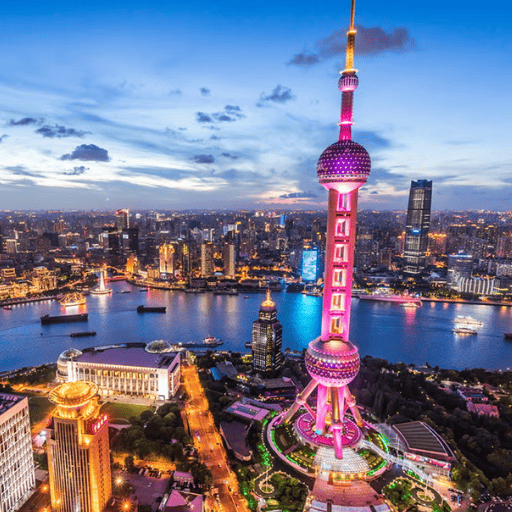
The underlying event is the peak daily temperature recorded at Shanghai Pudong International Airport on 4 July 2026, measured in degrees Celsius and resolved via Wunderground history. Historical data confirms July is Shanghai’s hottest month, with average highs of 87°F (30.6°C) and daily peaks rarely falling below 75°F (23.9°C) or exceeding 95°F (35°C)[1][9]. Summer highs regularly surpass 30°C, reaching 35°C during intense sunshine[5]. A current 0% implied probability for any specific outcome on Polymarket appears inconsistent with these climatic baselines, whereas a similar market for 5 July shows 31°C as the leading outcome at 38% probability[2]. This divergence highlights how platforms like Kalshi or Betfair might express risk via decimal odds rather than implied probability, while fee structures and KYC requirements vary significantly across Polymarket, Smarkets, and Robinhood’s prediction environment.
Traders should monitor the Shanghai Meteorological Bureau’s daily heat advisories and real-time radar for convective activity, as cloud cover can suppress peak temperatures by several degrees. Recent reports indicate parts of Pudong already exceeded 40°C this summer, with a Sunday high of 40.4°C marking the season’s peak[8]. While this extreme is an outlier, it underscores the volatility possible in July. The resolution depends entirely on Wunderground’s recorded maximum for all times on 4 July, making hourly station updates critical. Platforms diverge here: Polymarket uses binary outcomes with implied probability, while Kalshi offers continuous contracts priced in decimal odds, and Betfair’s liquidity model differs from Smarkets’ fee-transparent approach. Understanding these mechanics is essential when comparing book performance on weather-specific events.
Methodology
This page compares Highest temperature in Shanghai on July 4? specifically across Polymarket, Kalshi, Betfair Exchange and Smarkets. The live probability is the Polymarket mid; the comparison columns summarise each venue's fee structure, KYC, settlement currency and payment rails. Every CTA routes to Robinhood Prediction Markets, which mirrors the Polymarket order book at 0% fees.
Resolution & payout
Polymarket settles via UMA Optimistic Oracle on Polygon. A proposer posts the outcome with a bond, the two-hour window runs, then the smart contract pays USDC.
Kalshi settles USD through the CFTC-regulated clearinghouse — the cleanest variant, with heavier KYC. Betfair Exchange settles in account currency (GBP/EUR), net of 2-5% commission. Smarkets follows the same model as Betfair with a lower default 2% commission.
FAQ
- Polymarket vs Kalshi — which is better?
- Depends on your location. Kalshi is CFTC-regulated, US-only with full KYC. Polymarket is global, on-chain, no KYC up to $1,500. Polymarket has ~10x higher liquidity but higher regulatory risk.
- What does Polymarket cost vs Kalshi?
- Polymarket: 0% fees, only Polygon network costs (~$0.01/trade). Kalshi: up to 7% per trade plus spread. For high-frequency traders, Polymarket is dramatically cheaper.
- Which platform has the deepest liquidity?
- Polymarket — by a wide margin. Top markets reach $50-500M volume, Kalshi ~$200M cumulative, Betfair similar. Deeper liquidity means your trade moves the quote less.
- Is Betfair a Polymarket alternative?
- Only partially. Betfair Exchange is UK-focused with a sports-betting emphasis; they have politics markets but with thinner liquidity than Polymarket. Settlement in GBP/EUR, 2-5% commission on winnings.
- What about Smarkets as an alternative?
- Smarkets is a UK betting exchange with a lower default commission (2%) than Betfair. Liquidity on political markets is below Polymarket, comparable to Kalshi. Geo-blocked in many jurisdictions.
%22%2F%3E%3Cpath%20d%3D%22M%206%2066%20A%2026%2026%200%200%201%2058%2066%22%20fill%3D%22%23E6B98D%22%20opacity%3D%220.9%22%2F%3E%3Ccircle%20cx%3D%2232%22%20cy%3D%2226%22%20r%3D%2222%22%20fill%3D%22%23F5CBA7%22%2F%3E%3Crect%20x%3D%2210%22%20y%3D%224%22%20width%3D%2244%22%20height%3D%2214%22%20rx%3D%227%22%20fill%3D%22%2314b8a6%22%20opacity%3D%220.9%22%2F%3E%3Crect%20x%3D%228%22%20%20y%3D%2218%22%20width%3D%228%22%20%20height%3D%2218%22%20rx%3D%224%22%20fill%3D%22%2314b8a6%22%20opacity%3D%220.7%22%2F%3E%3Crect%20x%3D%2248%22%20y%3D%2218%22%20width%3D%228%22%20%20height%3D%2218%22%20rx%3D%224%22%20fill%3D%22%2314b8a6%22%20opacity%3D%220.7%22%2F%3E%3C%2Fsvg%3E) and
and%22%2F%3E%3Cpath%20d%3D%22M%206%2066%20A%2026%2026%200%200%201%2058%2066%22%20fill%3D%22%23E6B98D%22%20opacity%3D%220.9%22%2F%3E%3Ccircle%20cx%3D%2232%22%20cy%3D%2226%22%20r%3D%2222%22%20fill%3D%22%23F5CBA7%22%2F%3E%3Cpath%20d%3D%22M%2010%2026%20A%2022%2028%200%200%201%2054%2026%22%20fill%3D%22%2314b8a6%22%20opacity%3D%220.9%22%2F%3E%3C%2Fsvg%3E)
Trade Highest temperature in Shanghai on July 4? on Robinhood Prediction Markets
Live order book, 0% fees, USDC settlement in seconds.
Open live market →