Platform comparison
| Platform | YES odds | NO odds | Fee | KYC | Settlement | |
|---|---|---|---|---|---|---|
Polymarket (via Robinhood Prediction Markets) Pick polygram.ink (preferred broker) |
100% | 0% | 0% (USDC on-chain) | No-KYC up to $1,500 | USDC, auto via UMA oracle | Go to the live market → |
Polymarket (direct) polymarket.com |
100% | 0% | 0% | Geo-blocked in US/UK/EU | USDC, on-chain | Go to the live market → |
Kalshi kalshi.com |
— | — | Up to 7% per trade | US-only, KYC required | USD | Go to the live market → |
Betfair Exchange betfair.com |
— | — | 2-5% commission | Full KYC from first trade | GBP / EUR | Go to the live market → |
Manifold Markets manifold.markets |
— | — | Play-money (mana) | None — play-money | Mana (no cash-out) | Go to the live market → |
Outcome probabilities
Current market-implied probability for each outcome, from the live order book.
| Outcome | Probability |
|---|---|
| 36°C | 100% |
| 29°C or below | 0% |
| 30°C | 0% |
| 31°C | 0% |
| 32°C | 0% |
| 33°C | 0% |
| 34°C | 0% |
| 35°C | 0% |
| 37°C | 0% |
| 38°C | 0% |
| 39°C or higher | 0% |
Market context
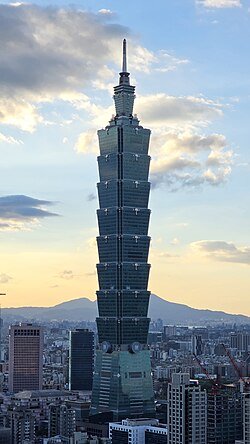
Taipei’s hottest part of the year usually sits in July, with average daytime highs around 34°C and frequent humid, sticky conditions that can make the city feel warmer than the thermometer reading suggests.[4][5] For a market resolving to the *highest* temperature at Taipei Songshan Airport on 24 July, that matters because the distribution is already clustered in the low-to-mid 30s rather than around a single obvious extreme. Polymarket currently shows 35°C as the leading outcome at 25%, with 32°C next at 19%, which implies a relatively broad spread across adjacent bands rather than a consensus on one exact peak.[1]
That is why a 0% crowd-implied probability on YES is unusually hard to reconcile with the seasonal baseline. Historical and comparable July weather in Taipei suggests the market is better read as a weather-band contest than a binary hot/not-hot bet: July is typically the warmest month, with highs often around 33–34°C and the city’s recorded extremes well above that, so late-morning sunshine and afternoon convection can still push a station reading into the upper 30s.[4][5] WeatherSpark also shows July solar energy and wind conditions staying fairly steady through the month, which supports the idea that short-term local effects, rather than broad seasonal shifts, drive the final print.[2]
The main catalysts are the same ones traders watch in any same-day temperature market: the morning forecast for Taipei, any sudden shift in cloud cover or rainfall, and whether sea-breeze or thunderstorm activity caps the peak before the market’s cut-off at 12:00 UTC, after which the day’s high is still taken from the full Wunderground record for the station.[1] On platform mechanics, Polymarket quotes direct outcome prices, so a 25¢ share is treated as a 25% implied chance, while Kalshi and similar venues typically present market prices in a dollar- or 0–100 style that traders mentally convert into probability; Betfair and Smarkets instead add exchange-style commission, which makes execution and breakeven differ even when the underlying temperature view is identical. KYC access also varies materially by venue, so the same Taipei temperature view can be priced, taxed, and accessed differently depending on the book used.
Methodology
We read Highest temperature in Taipei on July 24? from four platform perspectives: Polymarket (on-chain CLOB), Kalshi (CFTC-regulated exchange), Betfair Exchange (sports book exchange), Smarkets (peer-to-peer betting exchange). Polymarket's live mid is the canonical probability; the side-by-side columns benchmark fees, KYC, settlement currency and deposit rails so you can choose the venue that fits your jurisdiction and trade size.
Resolution & payout
Polymarket settles via UMA Optimistic Oracle on Polygon. A proposer posts the outcome with a bond, the two-hour window runs, then the smart contract pays USDC.
Kalshi settles USD through the CFTC-regulated clearinghouse — the cleanest variant, with heavier KYC. Betfair Exchange settles in account currency (GBP/EUR), net of 2-5% commission. Smarkets follows the same model as Betfair with a lower default 2% commission.
FAQ
- What does Polymarket cost vs Kalshi?
- Polymarket: 0% fees, only Polygon network costs (~$0.01/trade). Kalshi: up to 7% per trade plus spread. For high-frequency traders, Polymarket is dramatically cheaper.
- Is Betfair a Polymarket alternative?
- Only partially. Betfair Exchange is UK-focused with a sports-betting emphasis; they have politics markets but with thinner liquidity than Polymarket. Settlement in GBP/EUR, 2-5% commission on winnings.
- What about Smarkets as an alternative?
- Smarkets is a UK betting exchange with a lower default commission (2%) than Betfair. Liquidity on political markets is below Polymarket, comparable to Kalshi. Geo-blocked in many jurisdictions.
- Are all these platforms regulated?
- No. Kalshi is CFTC-regulated (US). Betfair and Smarkets are UK Gambling Commission licensed. Polymarket operates without explicit regulation — a different risk profile than a regulated sportsbook.
- Which platform supports Klarna/SOFORT?
- Directly: none. Polymarket accepts only USDC on Polygon. Robinhood Prediction Markets offers a fiat on-ramp via Klarna or SOFORT (DE/AT/CH) and converts internally to USDC for the Polymarket order book. T+1 processing.
%22%2F%3E%3Cpath%20d%3D%22M%206%2066%20A%2026%2026%200%200%201%2058%2066%22%20fill%3D%22%23E6B98D%22%20opacity%3D%220.9%22%2F%3E%3Ccircle%20cx%3D%2232%22%20cy%3D%2226%22%20r%3D%2222%22%20fill%3D%22%23F5CBA7%22%2F%3E%3Crect%20x%3D%2210%22%20y%3D%224%22%20width%3D%2244%22%20height%3D%2214%22%20rx%3D%227%22%20fill%3D%22%2314b8a6%22%20opacity%3D%220.9%22%2F%3E%3Crect%20x%3D%228%22%20%20y%3D%2218%22%20width%3D%228%22%20%20height%3D%2218%22%20rx%3D%224%22%20fill%3D%22%2314b8a6%22%20opacity%3D%220.7%22%2F%3E%3Crect%20x%3D%2248%22%20y%3D%2218%22%20width%3D%228%22%20%20height%3D%2218%22%20rx%3D%224%22%20fill%3D%22%2314b8a6%22%20opacity%3D%220.7%22%2F%3E%3C%2Fsvg%3E) and
and%22%2F%3E%3Cpath%20d%3D%22M%206%2066%20A%2026%2026%200%200%201%2058%2066%22%20fill%3D%22%23E6B98D%22%20opacity%3D%220.9%22%2F%3E%3Ccircle%20cx%3D%2232%22%20cy%3D%2226%22%20r%3D%2222%22%20fill%3D%22%23F5CBA7%22%2F%3E%3Cpath%20d%3D%22M%2010%2026%20A%2022%2028%200%200%201%2054%2026%22%20fill%3D%22%2314b8a6%22%20opacity%3D%220.9%22%2F%3E%3C%2Fsvg%3E)
Trade Highest temperature in Taipei on July 24? on Robinhood Prediction Markets
Live order book, 0% fees, USDC settlement in seconds.
Open live market →